
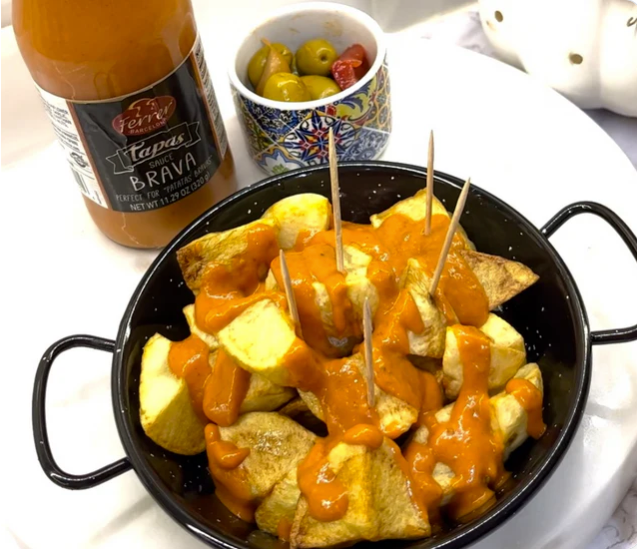
diced potatoes with salsa brava

Receta de Patatas Bravas

por Guillermo Pabon Garcia en Apr 06, 2024

Introducción

¡Patatas Bravas en sólo 15 minutos! Descubre cómo hacer en casa una de las tapas más tradicionales de España de forma sencilla. Te lo ponemos muy fácil gracias a nuestra Salsa Brava by Ferrer. Elaborado en Barcelona con ingredientes 100% naturales y un sabor auténtico que te hará sentir como si estuvieras en España.

Ingredientes

Direcciones

¡Sorprende a tus invitados en una noche de tapas con nuestra salsa brava by Ferrer! Cómpralo ahora en www.ibericotaste.us

Paso 1

Pelar y cortar las papas en cubos.

Paso 2

Pon suficiente aceite en la sartén y añade las patatas cuando esté hirviendo.

Paso 3

Quítalos cuando empiecen a dorarse.

Etapa 4

Colócalas en el plato y vierte la salsa brava por encima.

¡Buen provecho!
star

Deja un comentario

Ten en cuenta que los comentarios deben aprobarse antes de que se publiquen.

Spanish winter food isn’t typically spicy in the chili-hot sense, but it is very warming. Smoked paprika, garlic, and slow-cooked meats create deep, comforting flavors. Dishes like patatas bravas or callos may include chili or spice, but heat is usually balanced rather than intense.

Yes, nearly every region has its own winter stew. Northern regions favor rich bean dishes like fabada asturiana, central Spain is known for cocido, and mountain areas often cook meat-heavy stews designed to sustain people through cold, long days.

Absolutely. Tapas remain popular year-round, but in winter people prefer warm tapas such as patatas bravas, croquettes, meatballs (albóndigas), and stewed dishes rather than cold or seafood-based options.

Many traditional winter dishes are quite balanced, especially those based on legumes and vegetables. While cured meats are used, they’re often added for flavor rather than bulk, and meals are typically homemade and slow-cooked, making them both nutritious and satisfying.

Slow cooking allows tough cuts of meat, dried legumes, and root vegetables to become tender and flavorful. It also creates rich broths and sauces that retain heat and provide comfort, which is ideal during colder weather.

Yes, Spanish winter cuisine is strongly rooted in home cooking. Many classic cold-weather dishes—such as stews, soups, and braises—are traditionally prepared at home and eaten as long, leisurely meals. Recipes are often passed down through generations and made in large batches to feed families over several days.

Winter desserts in Spain tend to be richer and more traditional. Favorites include churros con chocolate, rice pudding (arroz con leche), and baked goods flavored with cinnamon, citrus, and almonds. These sweets are often enjoyed alongside hot chocolate or coffee, especially on cold days.