6 Andalusian Gourmet Essentials You’ll Want in Your Pantry
by Guillermo Pabon Garcia
on Jul 12, 2025
When we think of southern Spain, we think of sunshine, whitewashed villages, flamenco, and food that tells a story. Andalucía isn’t just a region—it’s a flavor profile in itself. Whether you’re building the perfect tapas board or simply want to discover new ingredients, these 6 handpicked gourmet Andalusian products bring the heart of southern Spain right to your kitchen.
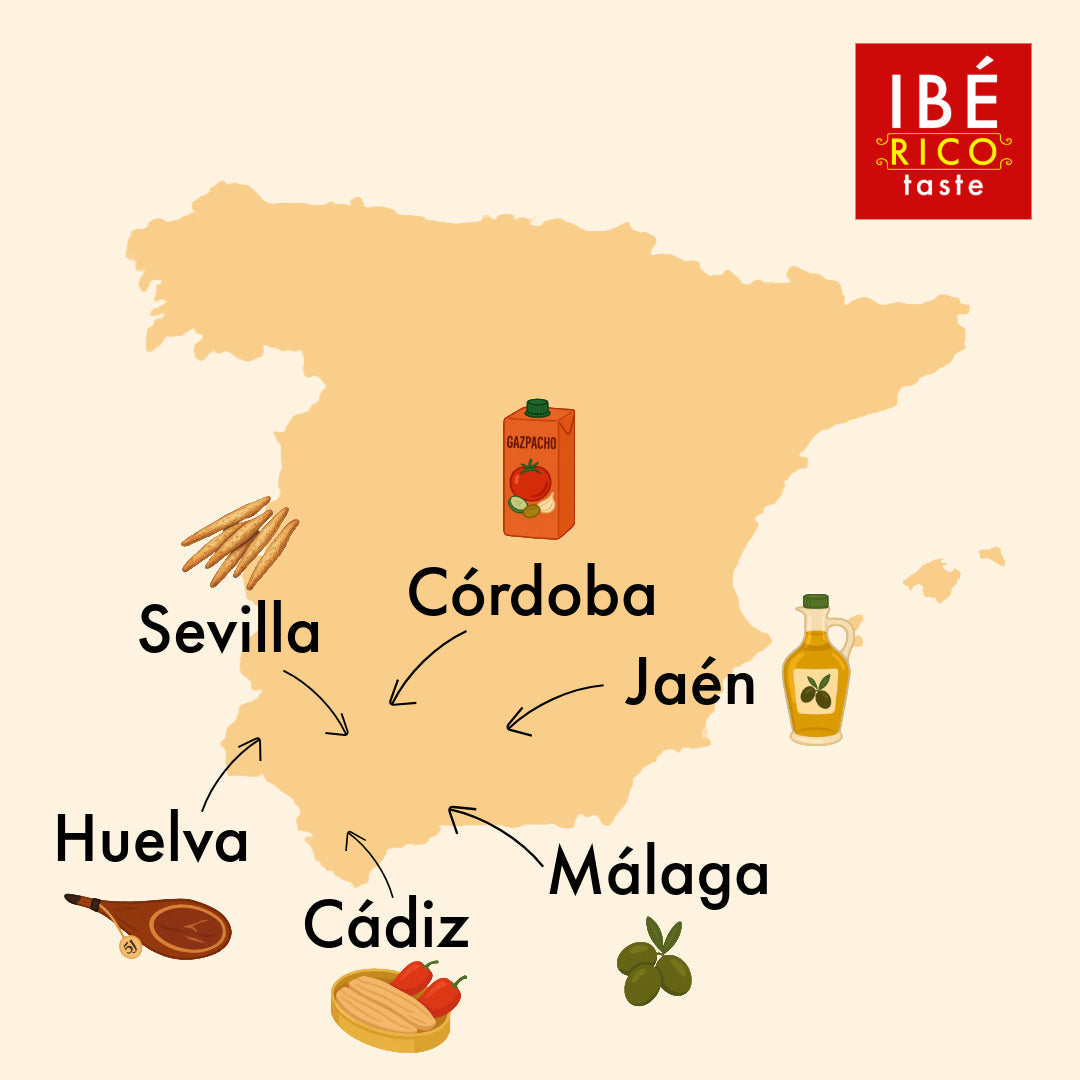
1. 5J Acorn-Fed 100% Ibérico Ham from Jabugo (Huelva)
Let’s start at the top. If there’s one product that defines Andalusian excellence, it’s 5J Jamón Ibérico de Bellota—also known as Pata Negra. Made from free-range Ibérico pigs raised in the dehesas of Huelva and fed on acorns during the montanera season, this is not just ham—it’s a cultural icon. The melt-in-your-mouth texture, the nutty aroma, the marbling… nothing compares. This is the best Spanish ham to buy online in the US if you want true artisan quality.
2. Obando Gourmet Picos from Seville
Simple? Yes. But don't underestimate these artisan picos—the crunchy breadsticks that are a staple in Andalusian bars and homes. Obando’s gourmet version is in a league of its own: golden, flaky, and with that perfect snap. Serve them with jamón, cheeses, or just dip them in olive oil. If you’re hosting a tapas night at home, these are non-negotiable.
3. Arteoliva Gazpacho from Córdoba
Nothing beats the heat of summer quite like a cold glass of gazpacho. And Arteoliva Gazpacho—made in Córdoba—is as close to homemade as it gets. It’s crafted with extra virgin olive oil and sun-ripened tomatoes, and comes ready to enjoy straight from the fridge (or the shelf!). Smooth, balanced, and packed with nutrients, it’s the perfect choice if you're looking to buy Spanish gazpacho online that’s authentic and healthy.
4. Oro Bailén Picual EVOO from Jaén
Andalucía is the global capital of olive oil, and Jaén is its epicenter. Oro Bailén Picual is a premium early-harvest extra virgin olive oil that has won dozens of international awards. Its flavor? Intense green fruitiness, hints of tomato vine and almonds, and a peppery finish that tells you it’s alive. This is the best Andalusian olive oil to buy in the US if you care about quality and origin.
5. Manzanilla Olives by Andalusian Olives (Málaga)
Not all olives are created equal. The Manzanilla olives from Málaga—brined with care and perfectly pitted—have a gentle, buttery flavor that makes them addictive. These are your go-to table olives, and they also happen to be perfect for martinis. If you’re putting together a Spanish tapas board, don’t forget the olives—they make everything come alive.
6. Ventresca Tuna Belly with Piquillo Peppers from Barbate (Cádiz)
This one’s a hidden gem. From the fishing town of Barbate in Cádiz comes ventresca de atún—the delicate belly cut of tuna, preserved in olive oil and paired with sweet roasted piquillo peppers. It’s rich, smooth, and perfect on crusty bread or crackers. If you’ve never tried Spanish canned seafood beyond anchovies or sardines, this is your next obsession.
Why These 6 Products Matter
Each of these items isn’t just delicious—they tell the story of the land, the people, and the traditions of Andalucía. Whether you’re gifting a food lover or stocking your own pantry, these authentic Andalusian gourmet products are worth every bite.
Ready to taste the real Andalucía? Shop these hand-selected items today and enjoy fast U.S. shipping on Spanish delicacies.