
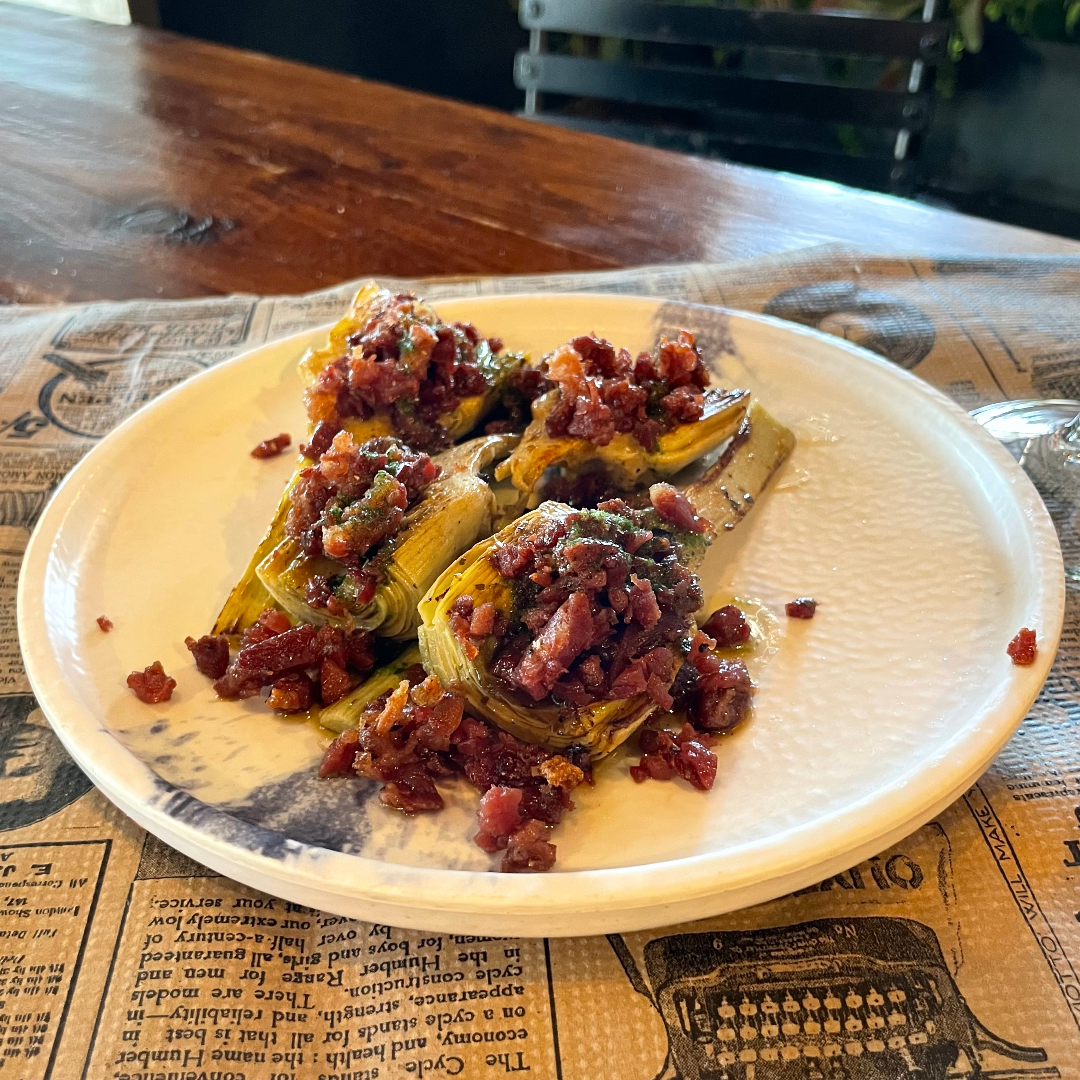
Artichokes with Jamón Ibérico de Bellota

Artichokes with Jamón Ibérico de Bellota

by Guillermo Pabon Garcia on Sep 17, 2023

Ingredients

Time:

15 min.

Difficulty:

Easy

 Servings:

2-3


Directions

Step 1

Prepare the ingredients before starting to cook. To do this, we will do the following:

  • Take out the artichokes, drain them a bit, and cut them in haves.
  • Cut the ham into small cubes.
  • Chop the garlic into small pieces.

Step 2

Heat a splash of olive oil in a skillet and add the chopped garlic until it starts to brown.

Step 3

When the garlic starts to turn golden, add the pieces of ham to the skillet.

Step 4

Wait a couple of minutes after adding the ham, then add the artichokes and increase the heat to medium-high.

Step 5

When the artichokes start to brown, add some ground pepper, and once the artichokes develop a toasted texture, remove the skillet from the heat.

Step 6

Remove the artichokes and place them one by one on the plate. Then, take the ham cubes with a spoon and sprinkle them over the artichokes.

Step 7

Drizzle a little olive oil and sprinkle some truffle salt on top.

¡Buen provecho!

star

Leave a comment

Please note, comments need to be approved before they are published.

Spanish winter food isn’t typically spicy in the chili-hot sense, but it is very warming. Smoked paprika, garlic, and slow-cooked meats create deep, comforting flavors. Dishes like patatas bravas or callos may include chili or spice, but heat is usually balanced rather than intense.

Yes, nearly every region has its own winter stew. Northern regions favor rich bean dishes like fabada asturiana, central Spain is known for cocido, and mountain areas often cook meat-heavy stews designed to sustain people through cold, long days.

Absolutely. Tapas remain popular year-round, but in winter people prefer warm tapas such as patatas bravas, croquettes, meatballs (albóndigas), and stewed dishes rather than cold or seafood-based options.

Many traditional winter dishes are quite balanced, especially those based on legumes and vegetables. While cured meats are used, they’re often added for flavor rather than bulk, and meals are typically homemade and slow-cooked, making them both nutritious and satisfying.

Slow cooking allows tough cuts of meat, dried legumes, and root vegetables to become tender and flavorful. It also creates rich broths and sauces that retain heat and provide comfort, which is ideal during colder weather.

Yes, Spanish winter cuisine is strongly rooted in home cooking. Many classic cold-weather dishes—such as stews, soups, and braises—are traditionally prepared at home and eaten as long, leisurely meals. Recipes are often passed down through generations and made in large batches to feed families over several days.

Winter desserts in Spain tend to be richer and more traditional. Favorites include churros con chocolate, rice pudding (arroz con leche), and baked goods flavored with cinnamon, citrus, and almonds. These sweets are often enjoyed alongside hot chocolate or coffee, especially on cold days.