
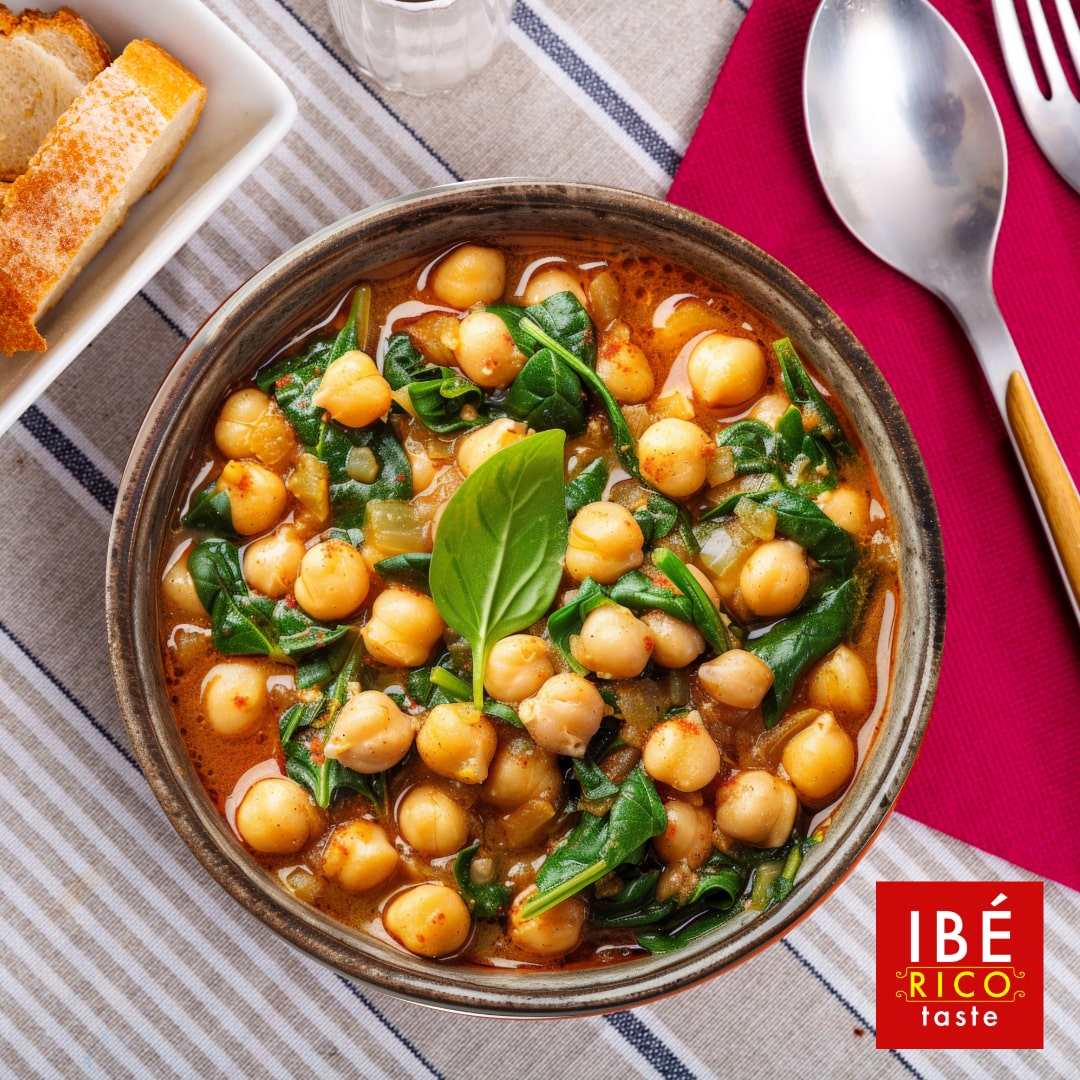
Chickpeas and Spinach Stew Recipe
by Guillermo Pabon Garcia
on Oct 16, 2024
Ingredients (4 servings):
- 2 jars of chickpeas in brine by El Navarrico
- 1 bag of fresh spinach (approximately 300 grams)
- 2 medium onions
- 1 clove of garlic
- 2 medium carrots
- 1 bay leaf
- 1 tablespoon of sweet Pimentón de La Vera La Dalia
- 1 dried ñora pepper
- 200 ml of fried tomato sauce
- Salt to taste
- Black pepper to taste
- Extra virgin olive oil
- Chicken broth (or vegetable broth for a vegetarian option)
Preparation:
Prepare the Vegetables:
-
Peel and finely chop the onions and garlic.
-
Wash and slice the carrots into small cubes or rounds.
-
Wash the spinach thoroughly and set aside.
Make the Sofrito (Base Sauce):
- In a large pot or casserole, heat a drizzle of extra virgin olive oil over medium heat.
- Add the onions and garlic, sautéing until they become translucent and fragrant.
- Incorporate the carrots and cook for an additional 5 minutes, stirring occasionally.
Add Seasonings:
- Stir in the tablespoon of sweet paprika and the ñora pepper paste. If using a dried ñora pepper, rehydrate it in hot water beforehand, scrape out the pulp, and add it to the pot.
- Mix quickly to prevent the paprika from burning and turning bitter.
- Add the tomato paste or tomato sauce, cooking everything together for 2-3 minutes.
Incorporate Chickpeas and Broth:
- Add the drained chickpeas to the pot, mixing them well with the sofrito.
- Pour in enough chicken broth (or vegetable broth) to cover the chickpeas by about 2-3 cm (approximately 1 inch).
- Add the bay leaf.
- Bring to a boil, then reduce the heat to medium-low and let it simmer.
Cooking:
- Cook the chickpeas for approximately 1.5 to 2 hours, or until they are tender. If using a pressure cooker, the time reduces to about 35-40 minutes.
- Stir occasionally and add more broth or hot water if necessary.
- Note: Cooking time may vary depending on the quality and freshness of the chickpeas.
Add the Spinach:
- When the chickpeas are nearly cooked, add the fresh spinach to the pot.
- Cook for another 5-10 minutes, until the spinach wilts and integrates into the stew.
Season and Finish:
- Taste the stew and adjust the salt and black pepper according to your preference.
- Remove the bay leaf before serving.
Serve:
- Ladle the stew into deep bowls and serve hot.
- Drizzle with a bit of extra virgin olive oil on top.
- Accompany with crusty bread for dipping, if desired.
Additional Tips:
Variations:
You can add other ingredients like diced potatoes, a pinch of cumin powder, or even a bit of chili pepper for a spicy touch.
Thicker Consistency:
For a creamier stew, mash a small portion of the chickpeas and stir them back into the pot.
Vegetarian Option:
Use vegetable broth instead of chicken broth for a vegetarian version.