
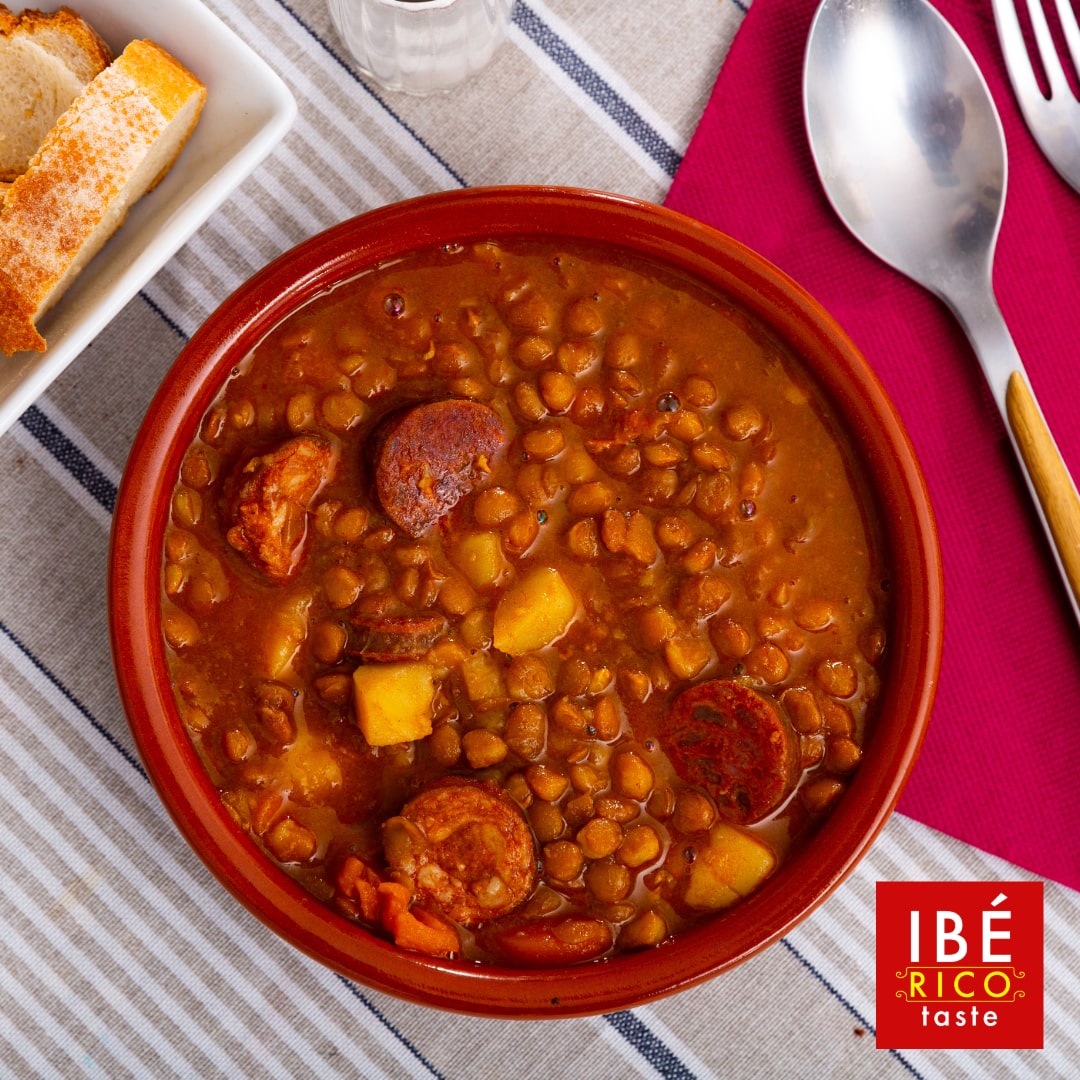
Pardina Lentils with Chorizo Recipe
by Guillermo Pabon Garcia
on Oct 16, 2024
Ingredients (serves 4)
- 2 jars of Pardina lentils Rosara
- 2 Spanish chorizo sausages for cooking Goikoa (sweet or spicy, according to preference)
- 1 medium onion, finely chopped
- 2 cloves of garlic, minced
- 1 large carrot, peeled and sliced
- 1 green bell pepper, chopped (optional)
- 1 ripe tomato, peeled and chopped or 2 tablespoons of fried tomato sauce Hida
- 1 potato, peeled and cut into small cubes (optional)
- 1 bay leaf
- 1 teaspoon of sweet paprika La Dalia (you can add a pinch of hot paprika if you like it spicy)
- 2 tablespoons of quality Extra Virgin Olive Oil
- Salt and pepper to taste
- Water or vegetable broth (enough to cover the lentils by about 2 inches)
Instructions:
Sauté the Aromatics:
- In a large pot or Dutch oven, heat the olive oil over medium heat.
- Add the chopped onion and minced garlic. Sauté until the onion becomes translucent and fragrant.
Add Vegetables and Chorizo:
- Add the sliced chorizo to the pot and cook for 2-3 minutes to release its flavors.
- Stir in the sliced carrot and chopped green bell pepper. Cook for another 5 minutes, stirring occasionally.
Incorporate Tomato and Paprika:
- Add the chopped tomato (or tomato sauce) to the pot. Cook until the tomato softens.
- Sprinkle the sweet paprika over the mixture and stir well to combine, ensuring the paprika doesn't burn.
Add Lentils and Liquid:
- Add the rinsed lentils to the pot, mixing them with the other ingredients.
- Pour in enough water or vegetable broth to cover the lentils by about 2 inches (approximately 1.5 liters).
- Add the bay leaf for extra flavor.
Simmer the Stew:
- Bring the mixture to a boil over medium-high heat.
- Reduce the heat to low, cover the pot, and let it simmer gently for 30-40 minutes, or until the lentils are tender. Stir occasionally.
- If the stew becomes too thick, add more water or broth as needed.
Season and Rest:
- Taste the lentils and season with salt and pepper as needed (keep in mind that chorizo can be salty).
- Remove the bay leaf from the pot.
- Let the lentils rest for a few minutes off the heat to allow the flavors to meld.
Serve:
- Ladle the lentils into bowls and serve hot.
- Accompany with crusty bread to soak up the delicious broth.
Additional Tips:
Variations:
You can add other vegetables like leek or celery for extra flavor.
For a heartier meal, include diced potatoes.
Vegetarian Option:
Omit the chorizo for a vegetarian version. To add a smoky flavor, increase the amount of paprika or use smoked paprika.
Storage:
This stew keeps well in the refrigerator for several days and can also be frozen for future meals.

